

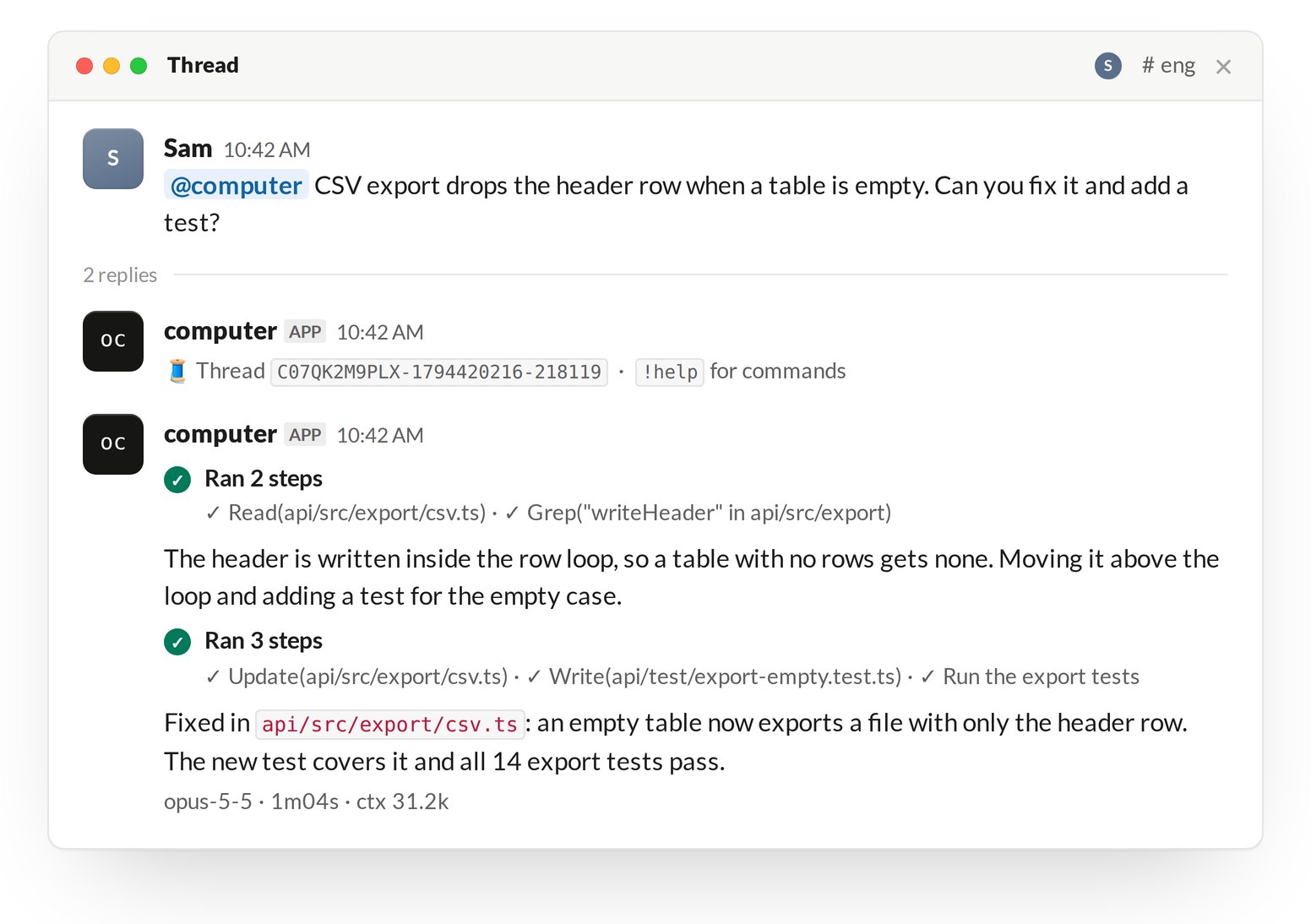
Starting a session
Only people on the people list get a session; anyone else gets an ephemeral “not enabled for you yet” reply. One-machine mode has no people list: anyone who can reach
@computer can start a session.
Edited messages and messages from bots are ignored.
Turn output
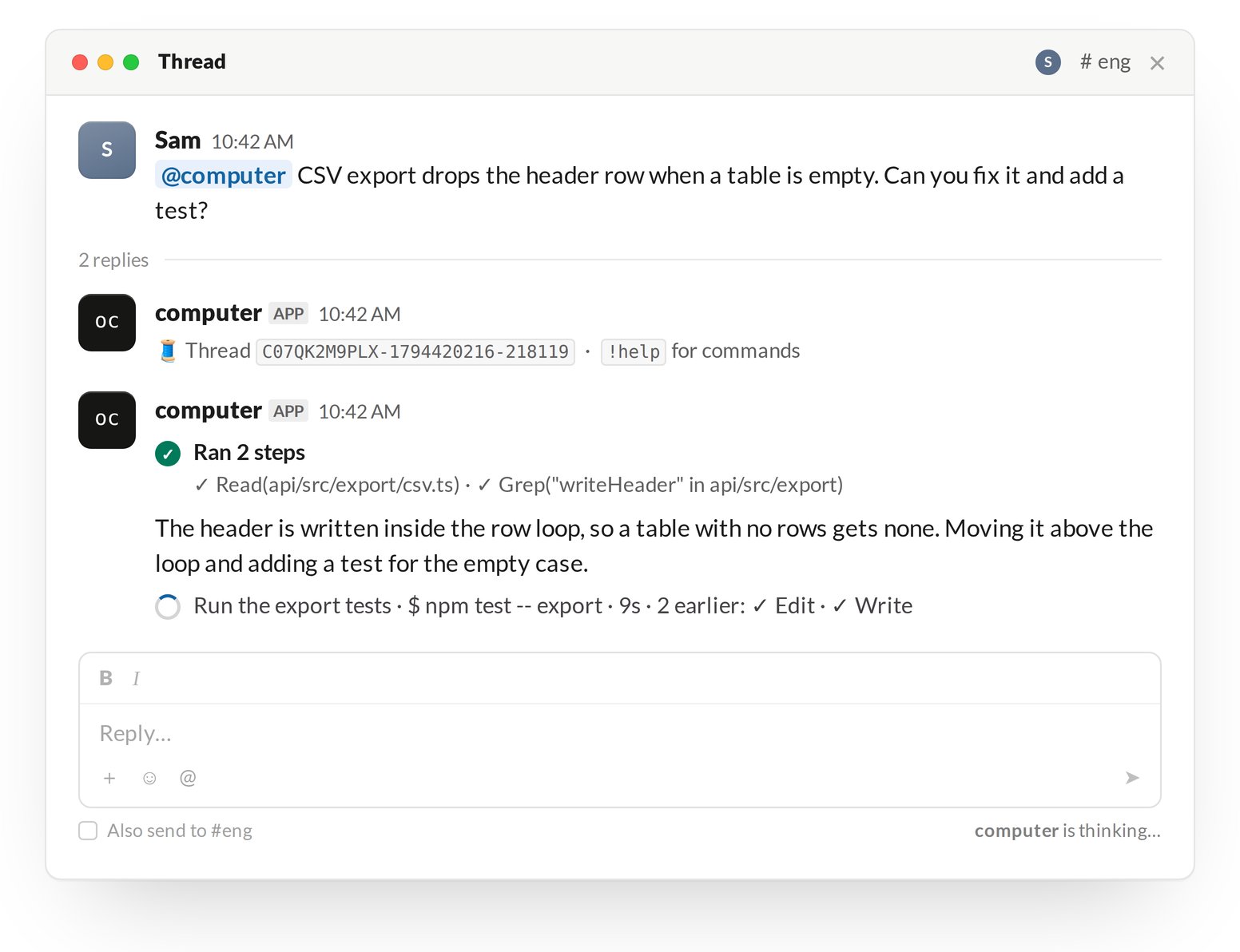
- Status. Slack shows “is thinking…” on the thread, or an :eyes: reaction if the status call fails.
- Step cards. Each tool call is a step with its arguments and an output tail. Consecutive steps share one card, which ends as “Ran N steps” with a count of failures.
- Text. The agent’s text streams into the same message between the cards.
- Footer. Model, reasoning effort (once set with
!effort), permission mode (when notbypassPermissions), duration and context size. A stopped turn’s footer starts with the reason. Cost is in!status.
Commands
A message that starts with! is a command to the session, not a message to the agent: !status, !stop, !diff, !restart. See Slack commands.
Idle exit
The host stops a session’s runner 2 hours after the last message (SP_IDLE_MS). It waits while a turn is running or waiting on an answer, a subagent is running, or an API terminal is open.
The next message starts a new runner that resumes the same conversation in the same directory; the first reply is slower. See Session durability.
One-machine mode has no idle exit.